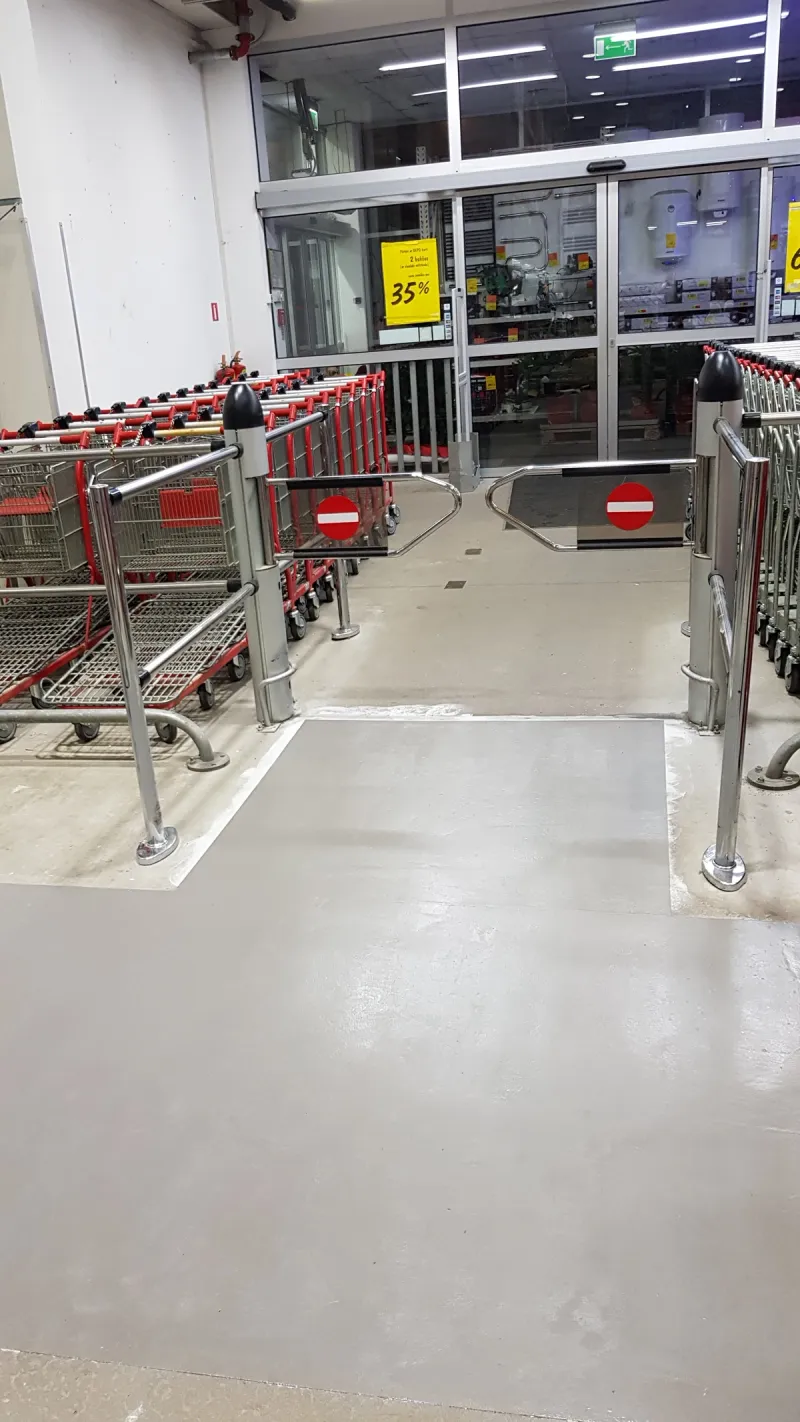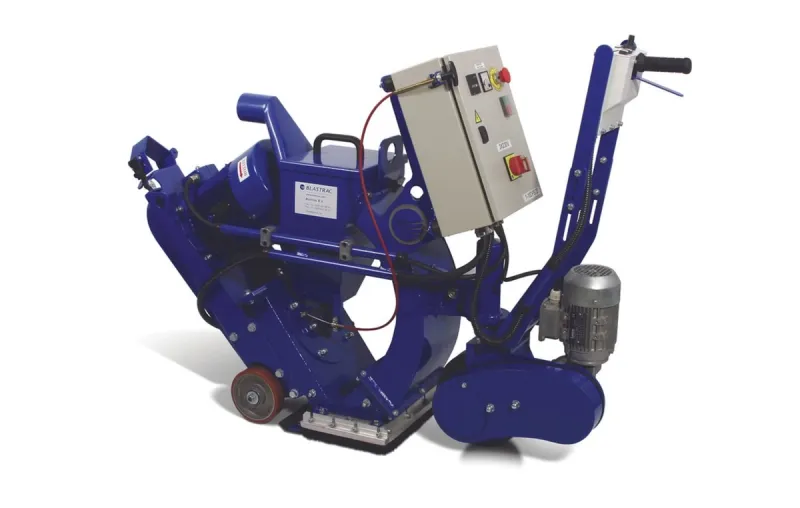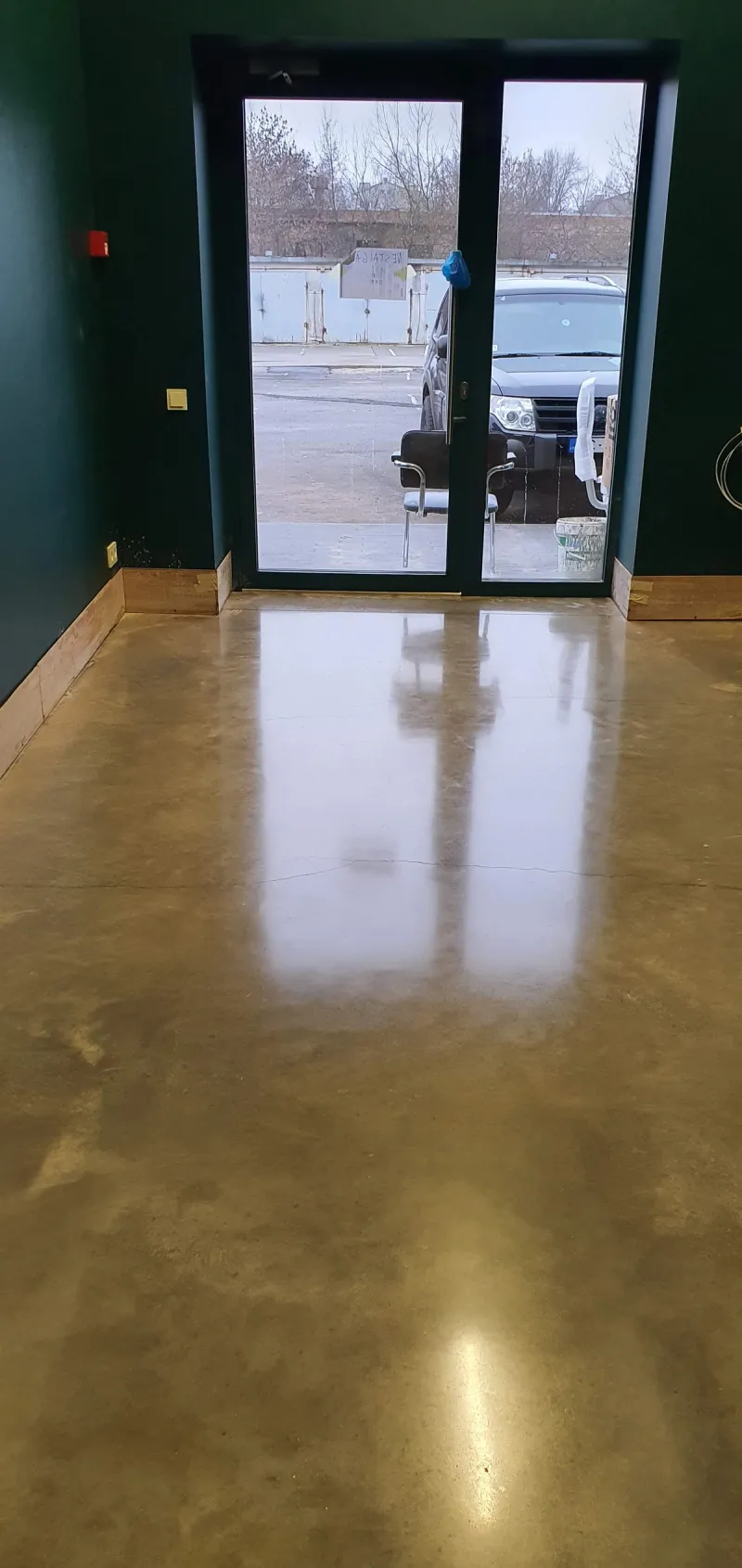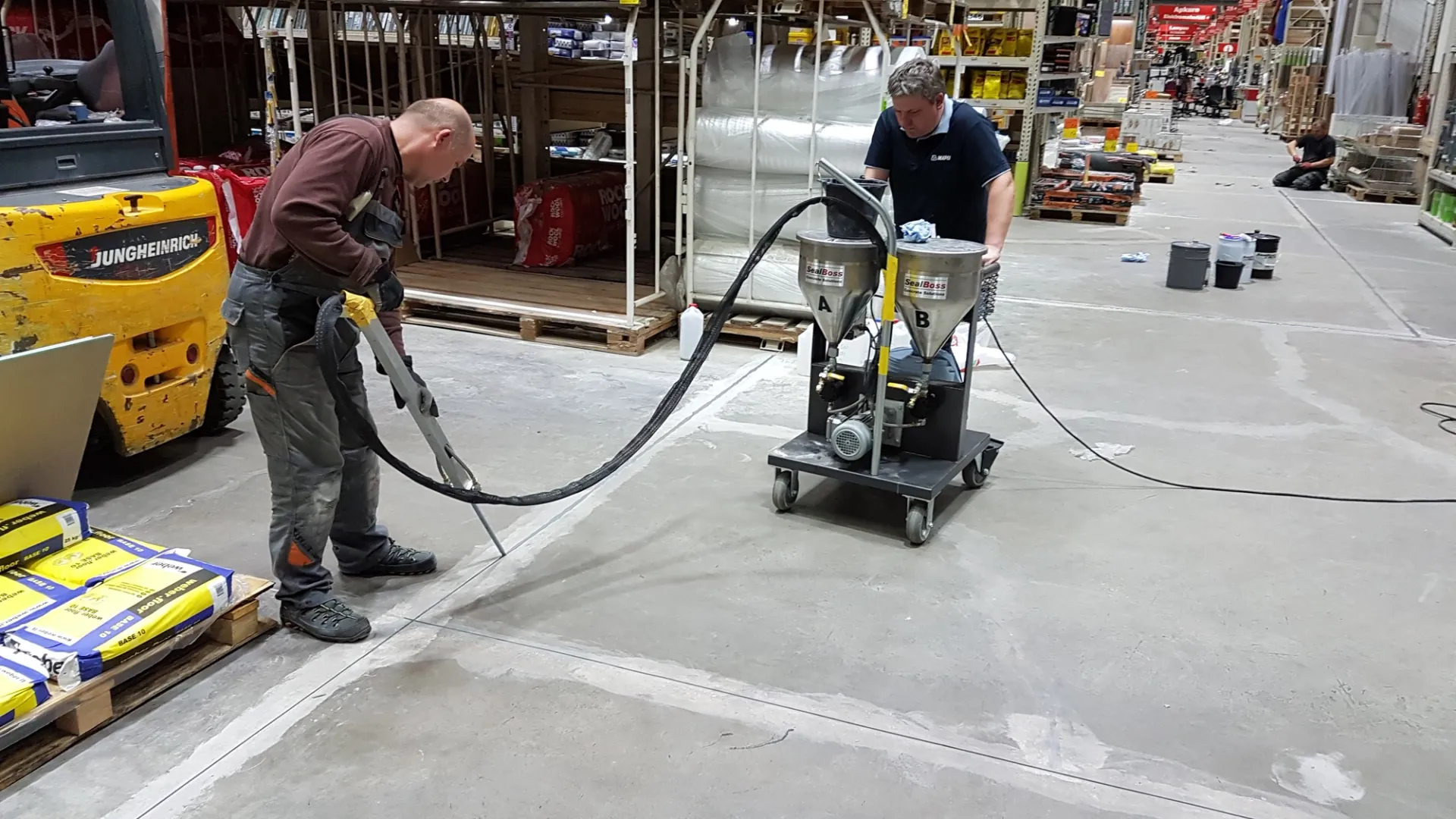
High-quality, fast and long-lasting repair of expansion joints and cracks is one of our company's trademarks. Before starting work, we carefully examine and analyse why the concrete floor was damaged. We start the repairs only after a thorough investigation, once the cause of the problem is understood.
All our concrete floor repair processes are specially adapted to heavily used premises, so that the business's daily work is interrupted as little as possible. We keep dust to a minimum and collect it, and the repaired surfaces are ready for use immediately. By separate agreement, we can match the colour of the repair material as closely as possible to the existing concrete floor. Our minimum guarantee on our work is 2 years. References available on request.
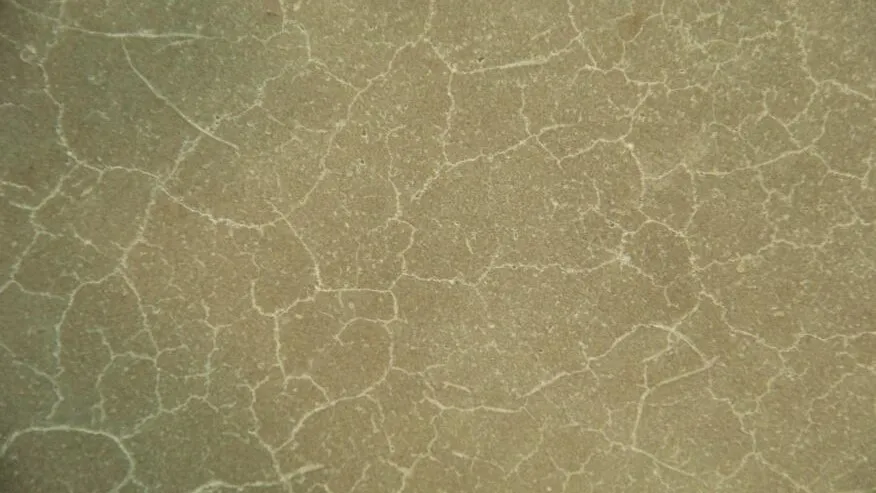
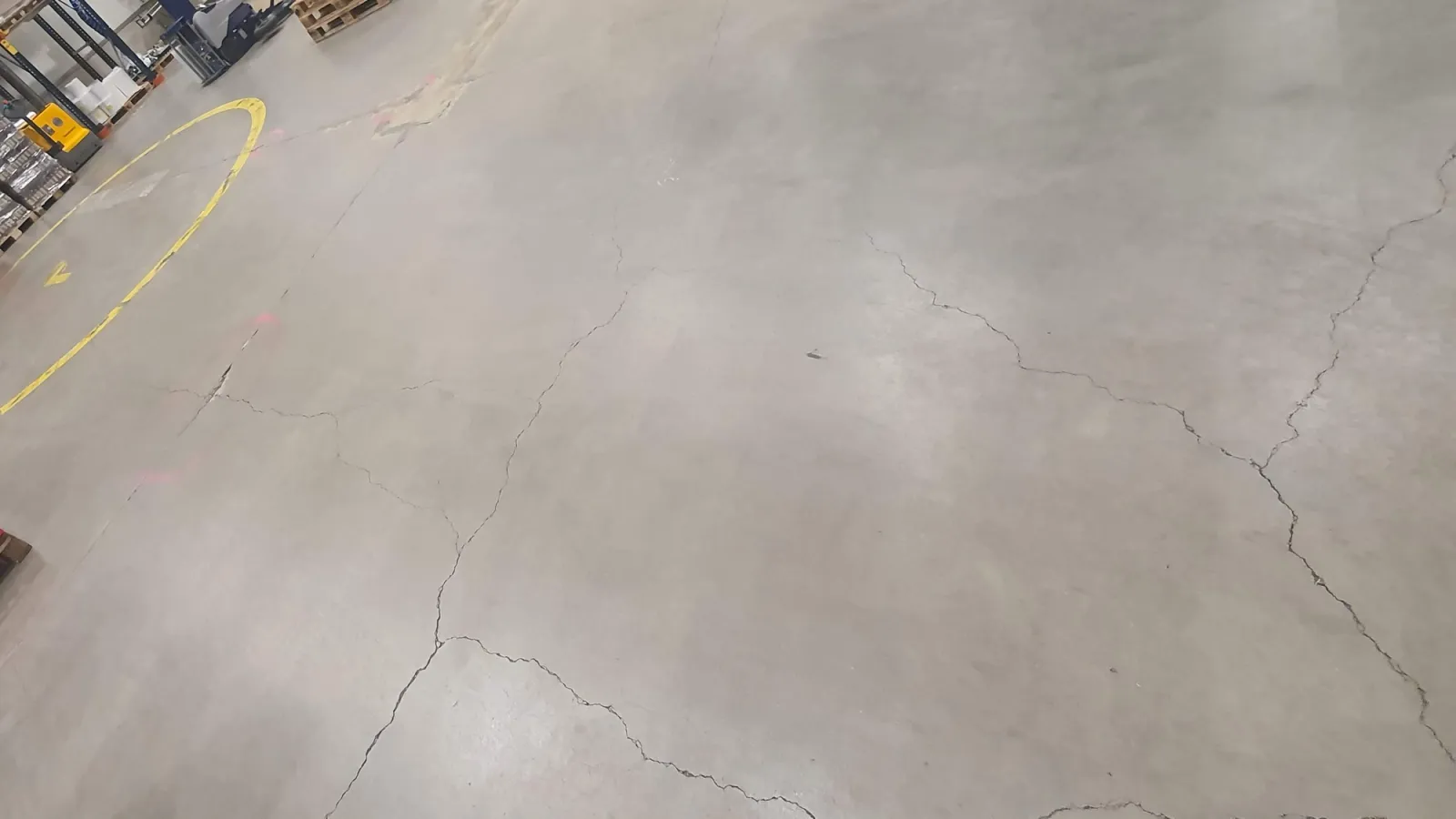
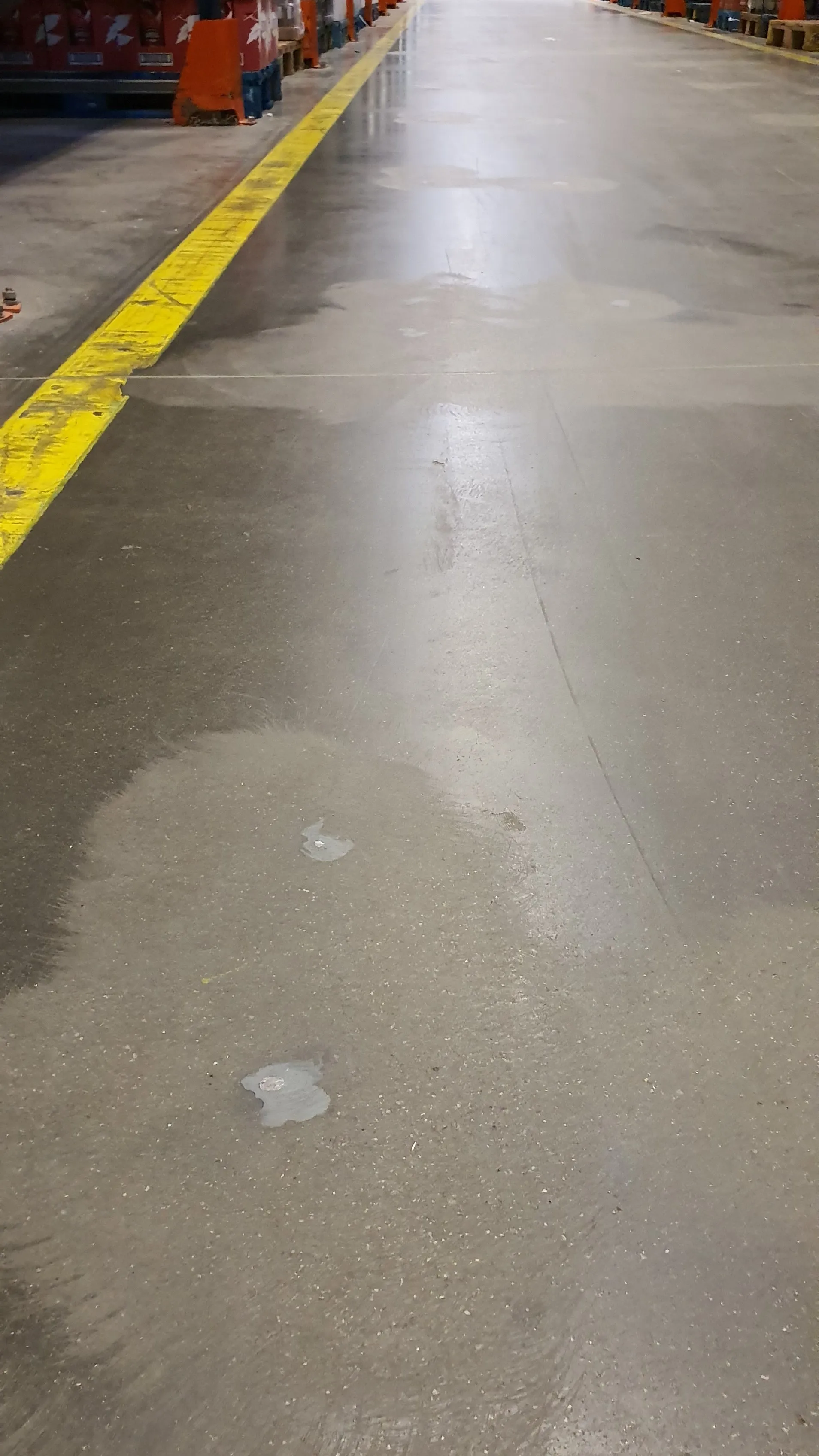
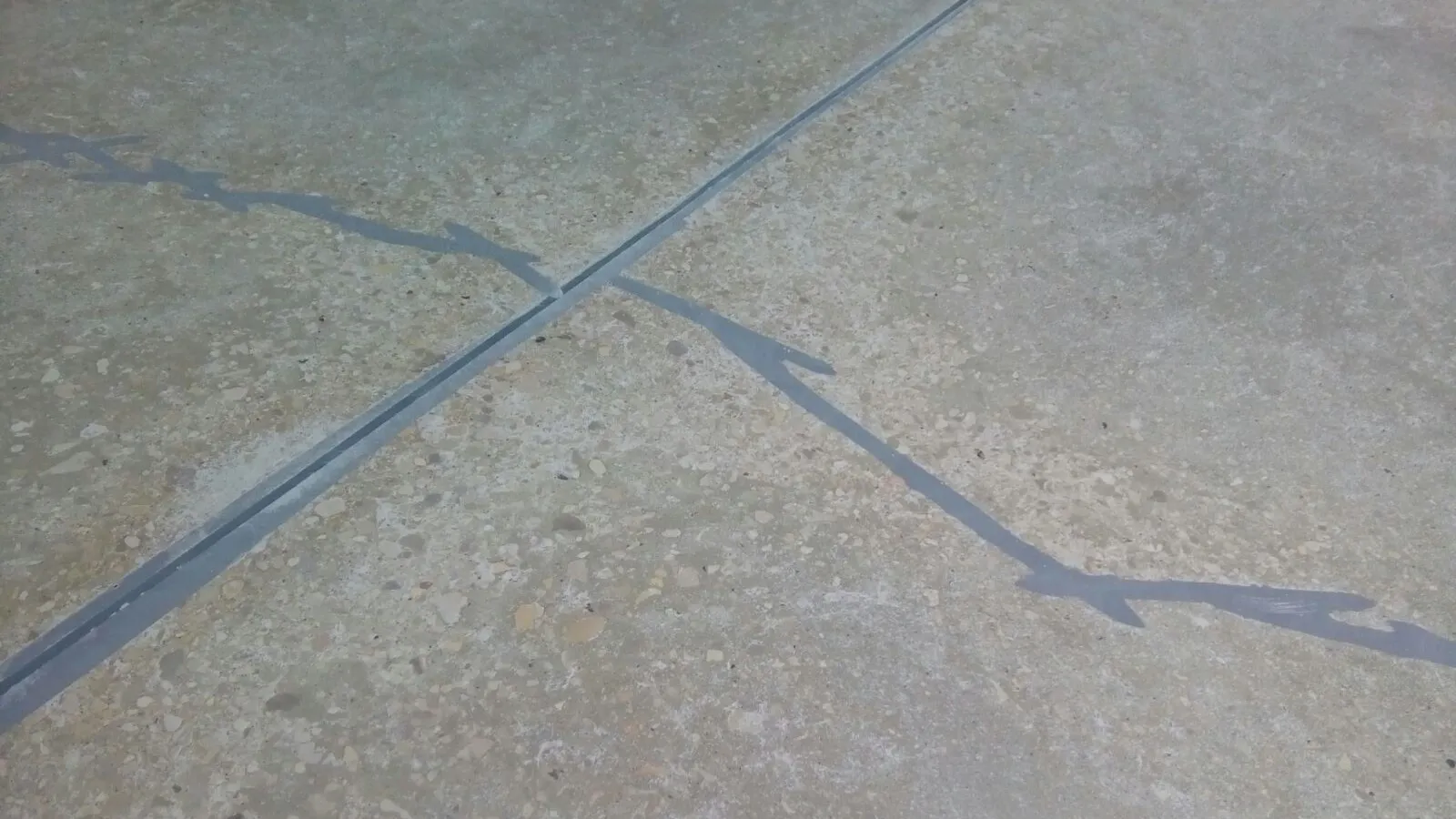
Cracks. Concrete floors usually show two types of crack. The first are small, no more than 1.5 mm wide, covering a wider area and resembling a spider's web. We call these crazing cracks. They appear on the surface of the floor and can usually be described as surface damage. The second type in concrete floors are structural cracks, which are wider and longer; usually the concrete slab has broken right through at the crack.
A "web" of crazing cracks is one of the most common forms of damage to concrete floors. There are usually two causes: chemical reactions, or drying too quickly after the concrete floor was poured. Repairing these cracks is still relatively cheaper and simpler than repairing wide structural cracks. The repair process described below only applies if the microcracks have not caused the top layer of the concrete floor to delaminate. Repair process: The damaged surface is ground. The concrete dust from grinding is mixed with a special hardener made for such cases, and the paste is worked back into the ground floor. After a few hours the dried paste is ground and polished again, leaving a crack-free floor.
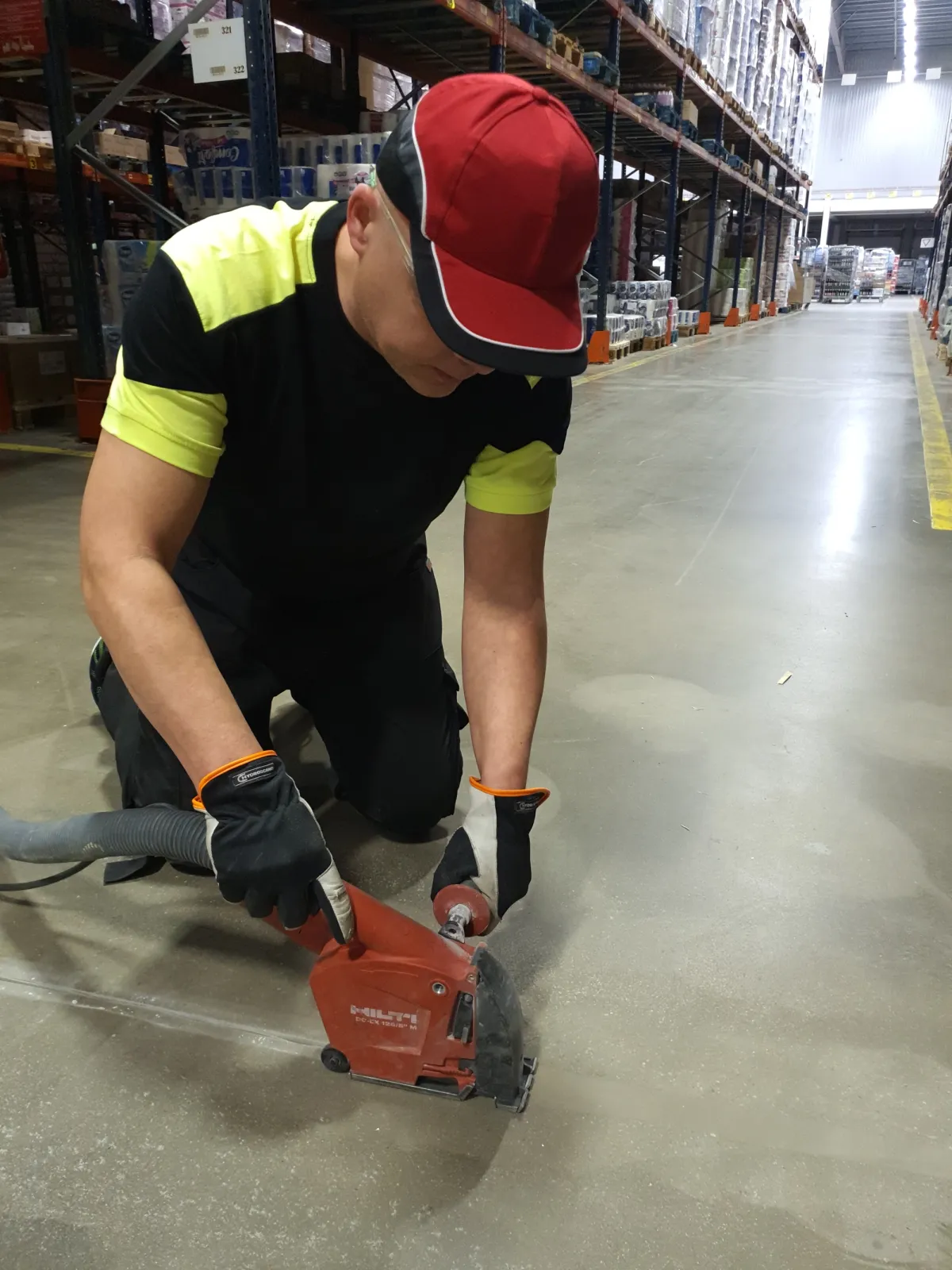
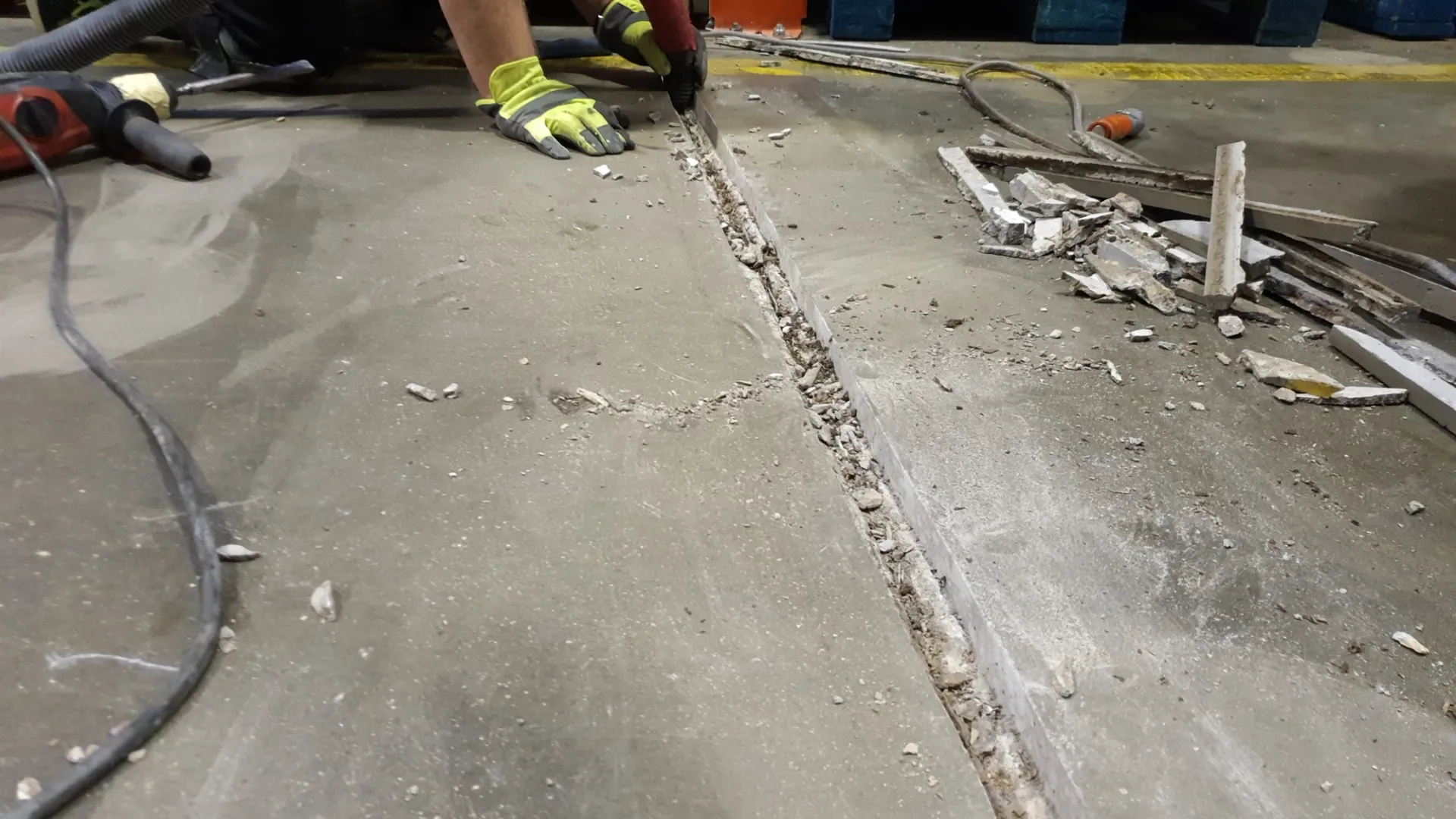
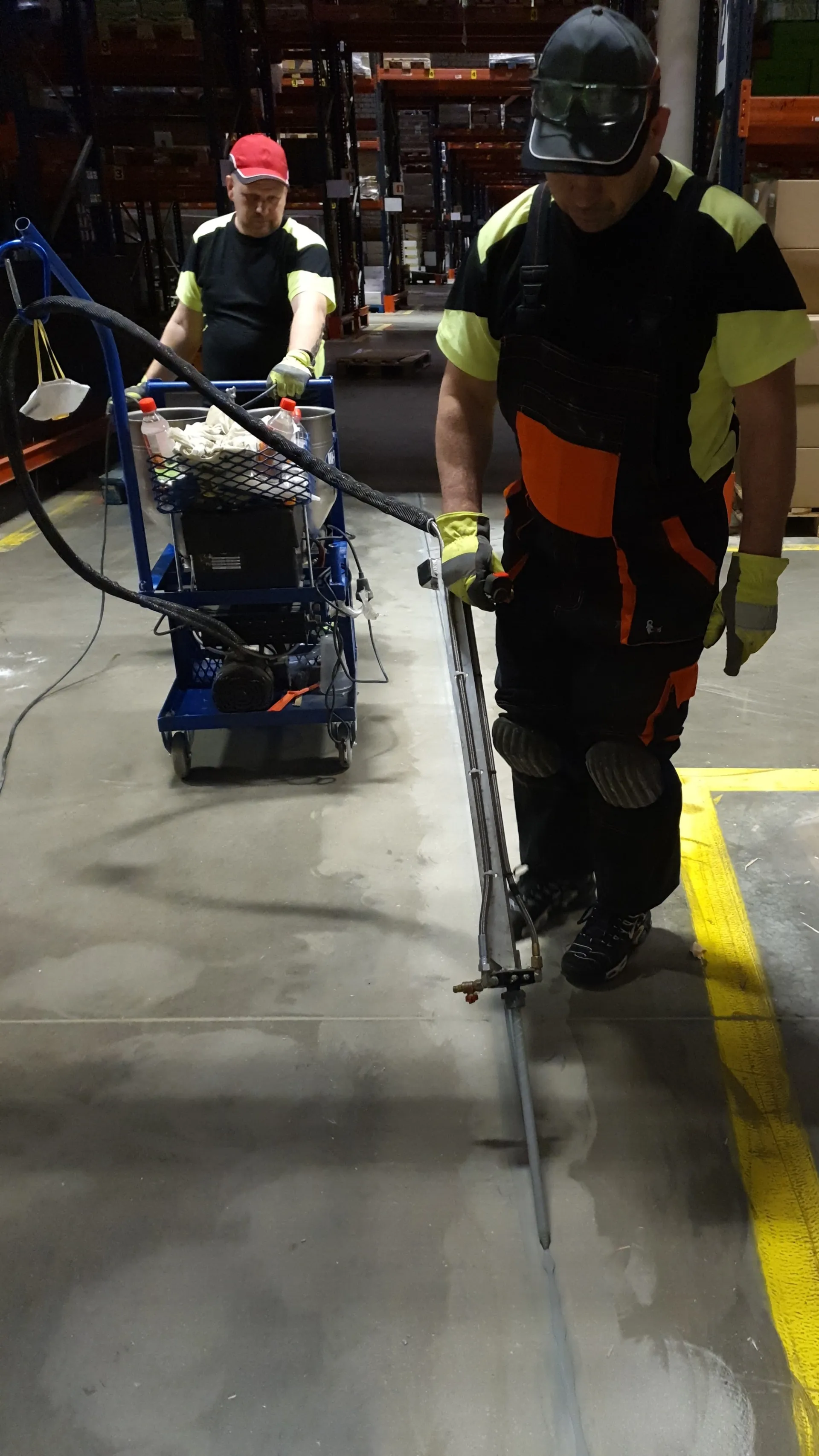
Structural cracks usually develop over a longer period and under significant floor loads. Causes include an incorrectly or poorly prepared base, unexpected movement of the base due to groundwater, or the building settling. Repair process: Before tackling the crack, we check whether soil stabilisation is needed. We then cut out the crack, leaving straight, stable edges that do not crumble. These are filled with a fast-curing (5–45 min.) material. Once the filling has hardened, the surface is ground and, if needed, treated with concrete protection products. In some cases we also chemically "weld" a broken concrete slab through its full thickness. This method is more expensive and is only used for very specific types of floor damage.
Hole and pothole repair
Holes of various kinds and other minor damage are common in industrial floors. They can result from deliberate actions (for example, removing racking) or accidents (for example, dropping something heavy on the floor). Defects during floor laying cannot be ruled out either.
We can fix all the damage described above very quickly and to a high standard. The materials we use also work in freezers down to −30 °C. Our repair materials cure very quickly: 2–60 minutes, depending on the ambient temperature and the client's wishes.
Expansion (movement) joint repair
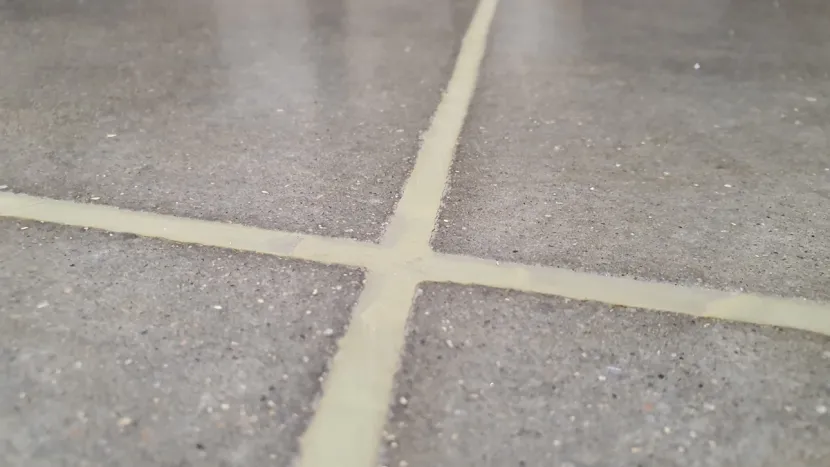
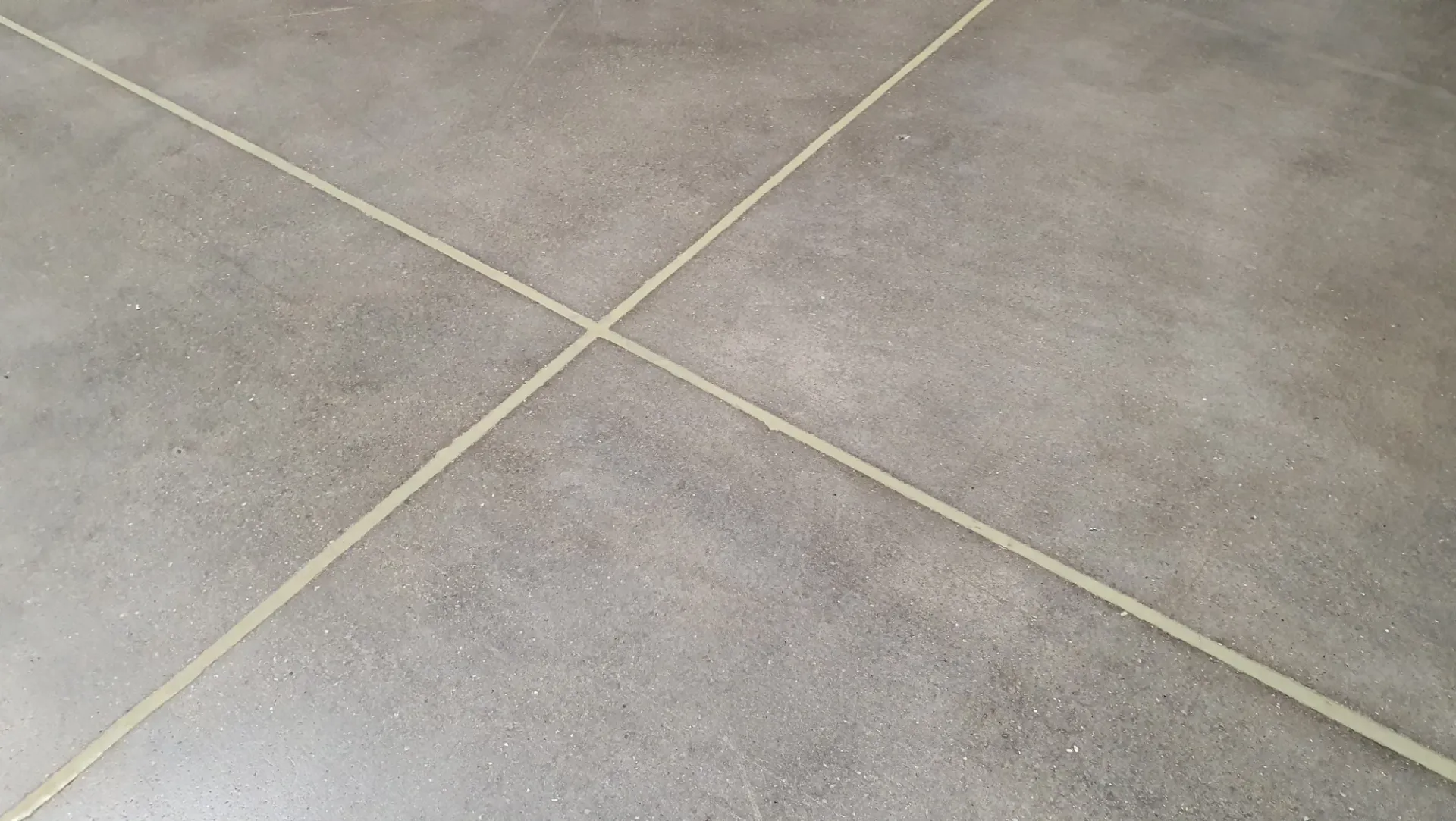
Expansion joints in concrete floors prevent cracks from forming, and can be thought of as controlled cracks. Joints should be as unnoticeable as possible and must not get in the way of anything moving across them. A perfect joint cannot be felt when a forklift drives over it or when you run your hand across it: the transition from one concrete slab to the next must be perfectly smooth. Only then will the slab edges not chip over time, and potholes or other damage not form. Neglected or poorly maintained concrete floor joints in shops, factories and warehouses are a very common problem in Latvia. As a result, businesses suffer indirect losses: more frequent forklift repairs, more dust, slower traffic over damaged sections of floor, damaged goods and more.
If the filling of a concrete floor joint is even slightly damaged and the joint edges have started to crumble, it is time for relatively simple and fairly inexpensive joint maintenance.
If a slightly damaged joint is not repaired in time, the repair can become many times more expensive, because this kind of damage usually spreads quickly.
Before starting any floor repair, it is very important to make sure the floor is stable. If you see floor movement like in the following video, floor stabilisation must be carried out before any joint, crack or other repair. Before such joints are repaired, their movement must be stopped:
Detailed description of expansion joint renovation
Joint repair (PDF, in Latvian)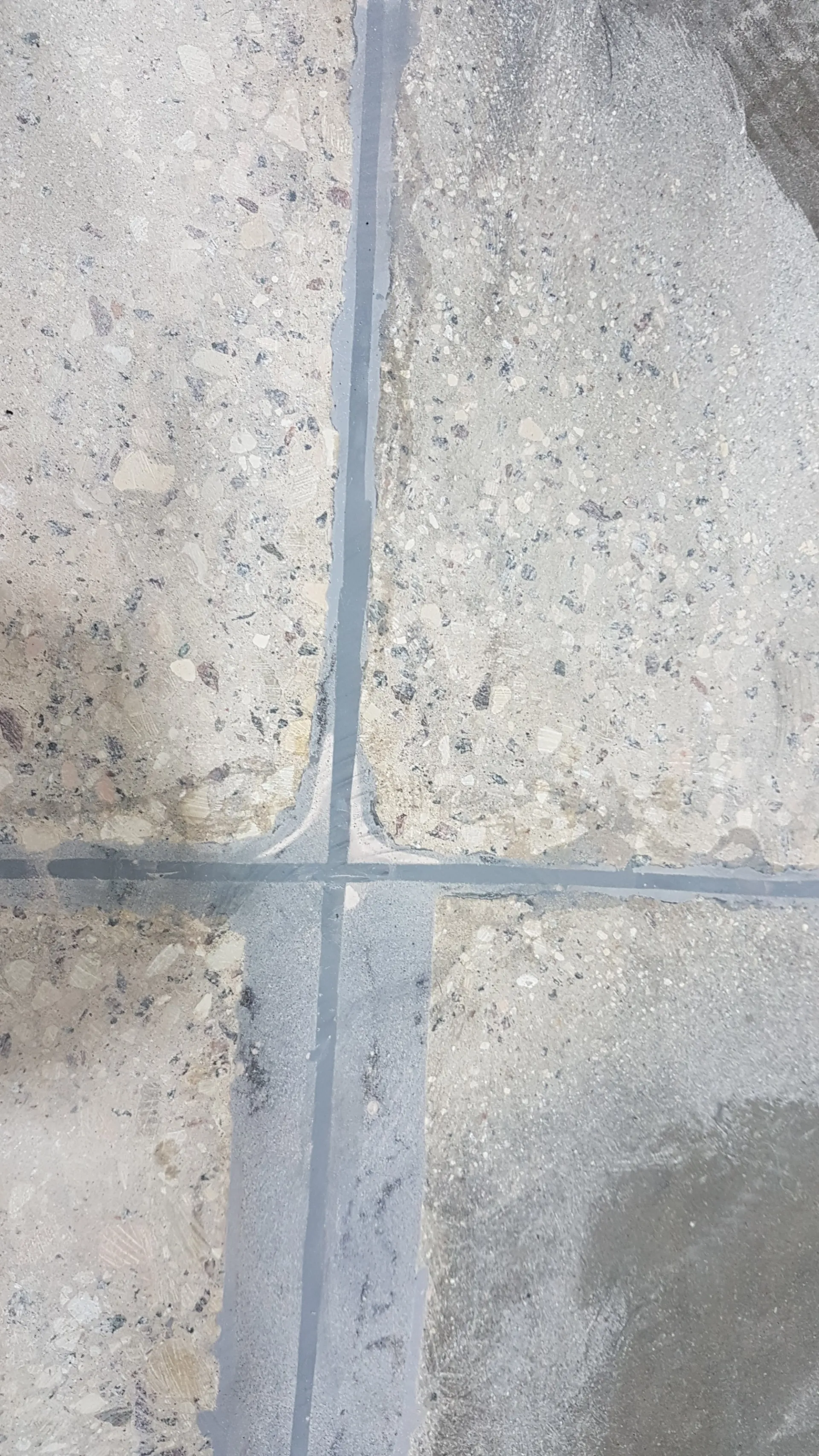
How to buy? What does it cost? Free samples:
Weekdays 8:00–17:00